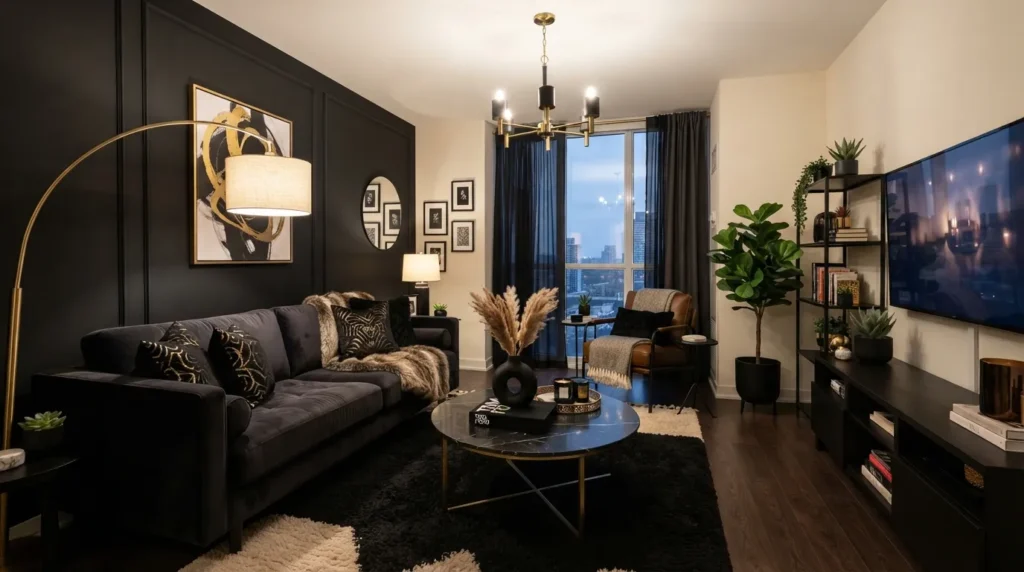
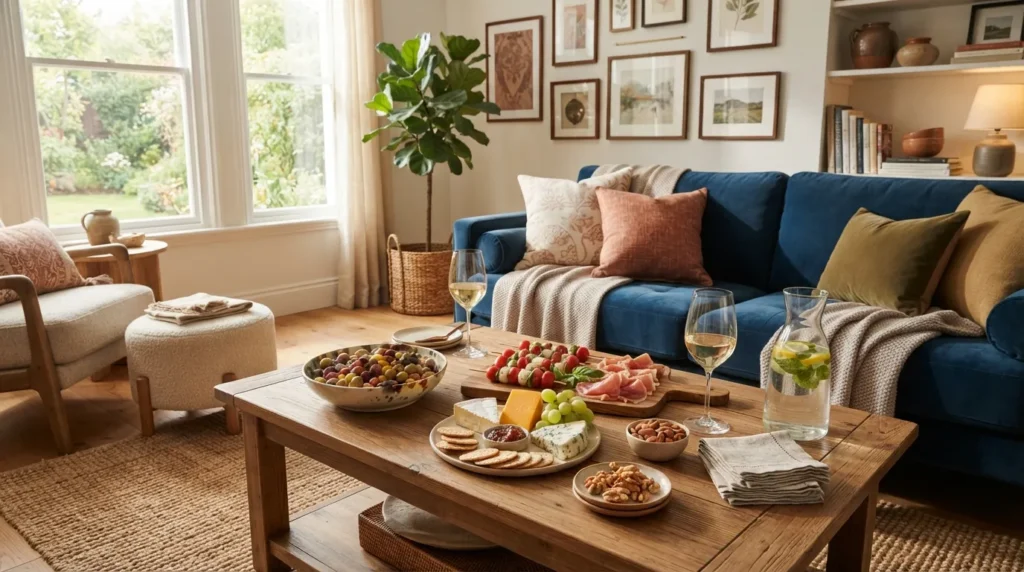
A living room should feel comfortable, useful, and personal rather than simply looking good in photos. The right combination of furniture, lighting, colors, textures, storage, and decorative details can make a room feel more spacious and inviting without requiring a complete makeover.
These 20+ living room decor ideas focus on practical ways to create a modern, warm, and uncluttered space. Whether you have a small apartment, a large family room, or an open-plan home, you can choose the ideas that fit your space, budget, and lifestyle.
1. Choose Minimalist Furniture With Clean Lines
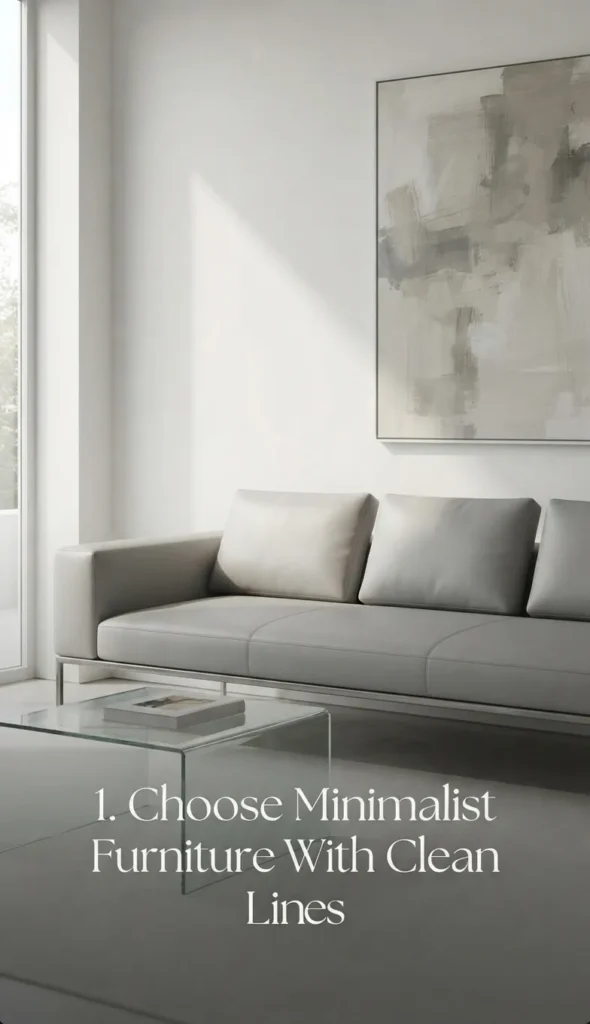
Start with furniture that has simple shapes, clear silhouettes, and smooth finishes. A sofa, coffee table, and storage unit can be enough to establish the main layout.
Keep visible floor space open and avoid overcrowding the room. Neutral furniture in white, beige, grey, or natural wood can create a calm foundation that works with many decorating styles.
2. Use a 60-30-10 Color Balance
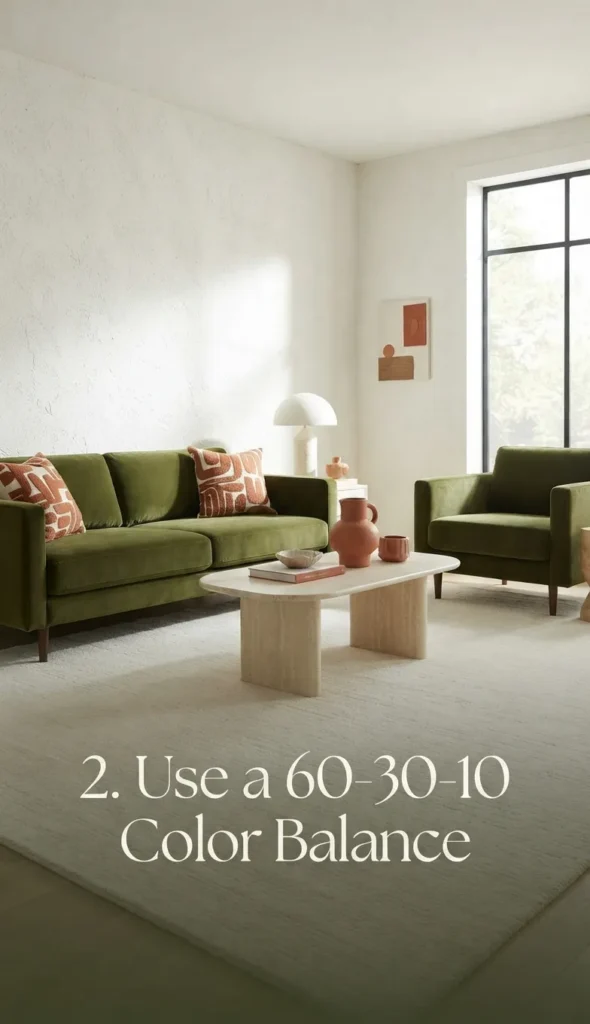
The 60-30-10 rule is an easy way to coordinate colors without making the room feel busy.
Use about 60% for the main color, such as walls, a large rug, or prominent furniture. Use 30% for a secondary color through curtains, ottomans, or coffee tables. Keep the final 10% for an accent color that adds personality.
For a softer modern room, beige, cream, grey, olive, clay, sand, mushroom, and soft terracotta work especially well together.
3. Create a Warm, Earthy Color Palette
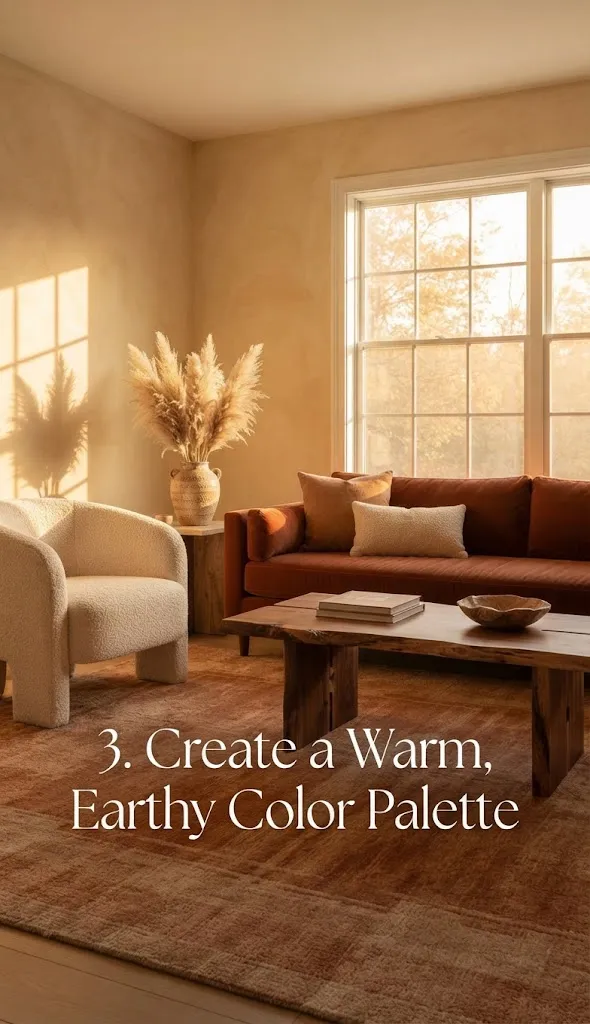
Cool grey is no longer the only choice for a modern living room. Warm shades such as brown, olive green, clay, sand beige, mushroom, and terracotta can make the space feel more relaxed.
Combine these colors with wood, linen, woven materials, soft fabrics, and natural lighting. Using different light and dark shades also adds depth without creating harsh contrast.
4. Build a Flexible Open or Broken-Plan Layout
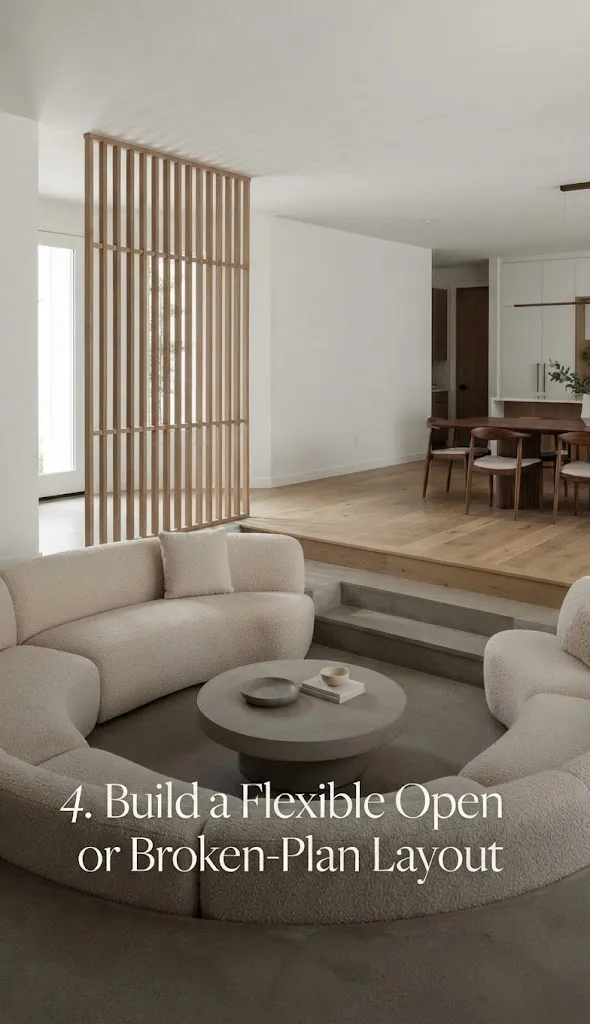
An open living room does not have to mean one large, undefined space. Create smaller purposeful zones for conversation, relaxing, working, or reading.
A sofa can separate the living area from a dining or work area, while a corner or alcove can become a small study space. This approach keeps movement easy while giving each part of the room a clear purpose.
5. Make Lighting Part of the Decor
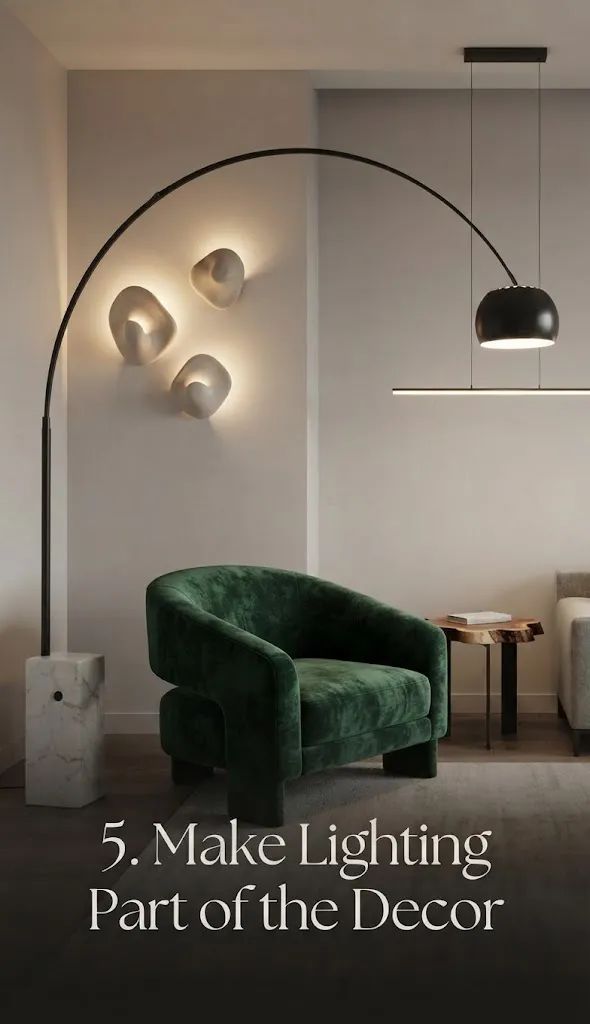
Good lighting can change the atmosphere of a living room throughout the day.
Layer table lamps, floor lamps, pendants, and wall lights instead of relying on one ceiling fixture. Smart bulbs can also provide brightness and color control through a phone or voice commands.
Use warmer lighting for relaxing evenings and brighter white light when you need the room to feel more energetic.
6. Add a Statement Wall
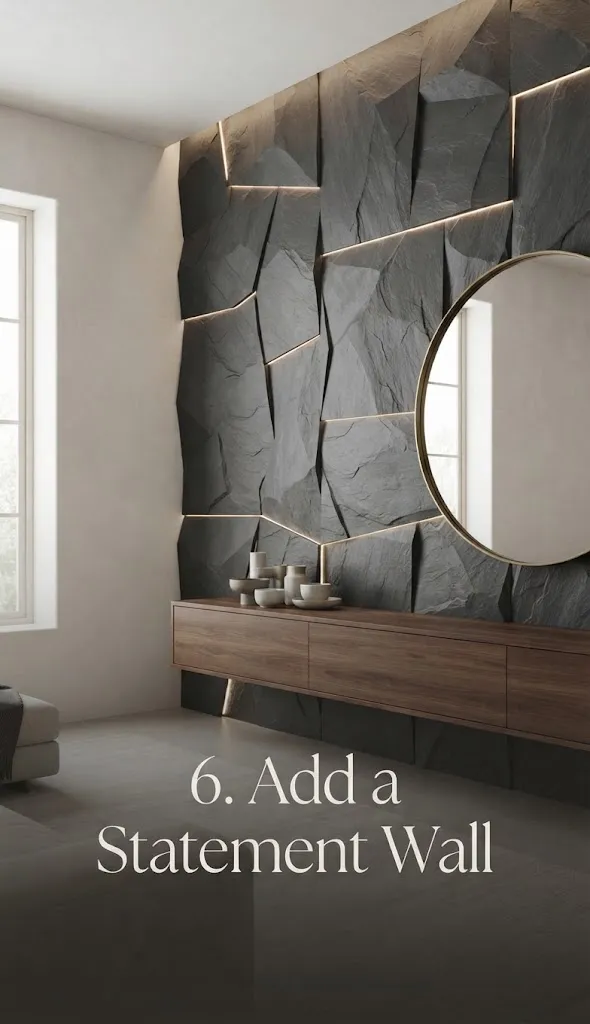
A focal wall can give the room character without decorating every surface.
Consider wallpaper, wooden panels, stone textures, artistic paint, or a large piece of modern art. A statement wall works particularly well behind a sofa or TV unit because it naturally draws attention to one area.
7. Select a Comfortable Sectional or Curved Sofa
A sofa should support everyday life, not just the appearance of the room. L-shape and U-shape sectionals provide generous seating for families and guests.
For a softer appearance, consider curved sofas or armchairs. Velvet, linen, cotton blends, and leather can each create a different mood while adding useful texture.
Low-profile and deeper seating can also make the room feel more relaxed and suitable for lounging.
8. Bring Indoor Plants Into Empty Areas
Indoor greenery adds freshness and natural color to a living room.
Snake plant, monstera, peace lily, and pothos are useful decorative choices. Place plants in corners, on shelves, beside windows, or near a coffee table.
Try grouping plants by height and size rather than spreading many small plants randomly around the room. Decorative pots can become part of the overall design.
9. Style the Coffee Table With Purpose
The coffee table often becomes the visual center of a seating area, so keep its styling simple.
Books, candles, small plants, and decorative trays can create an attractive arrangement. Glass, marble, wood, and natural-material tables can all work in a modern room.
A larger statement coffee table can also act as a functional centerpiece. Leave enough empty surface for everyday use instead of covering the entire table with accessories.
10. Layer Rugs and Textures
Textures make a neutral living room feel warmer and more interesting.
Combine cushions, throws, curtains, rugs, and upholstery in materials such as bouclé, velvet, linen, cotton, wool, and woven fabric.
For a larger room, try a neutral base rug with a smaller textured or patterned rug to help define the seating area. The goal is visual depth rather than excessive decoration.
11. Use Natural Wood for Warmth
Wood can balance modern furniture and neutral colors with a natural, welcoming feel.
Try a wood-slat feature wall, wooden shelves, flooring, a walnut coffee table, or furniture with light or medium wood finishes.
Wood works particularly well with beige, cream, grey, linen, plants, stone, and woven accents.
12. Add a Floating TV Unit
A wall-mounted TV unit can save floor space and give the room a cleaner appearance.
Built-in shelves can organize entertainment devices, books, and accessories, while cable management keeps wires out of sight. Wooden or glossy finishes can be selected according to the rest of the room.
This is especially useful in smaller living rooms where every inch of floor space matters.
13. Make a Small Room Feel Larger With Mirrors
Large mirrors can visually expand a small living room by reflecting light and creating the impression of additional space.
Place a mirror opposite a window to reflect natural light, or position one near a lighting source. Both framed and frameless designs can work with modern interiors.
For the best result, choose one appropriately sized mirror rather than filling the walls with several small mirrors.
14. Try Japandi for a Calm, Clutter-Free Look
Japandi combines Japanese elegance with Scandinavian simplicity. Its emphasis on minimalism, natural materials, and uncluttered spaces makes it suitable for people who prefer a peaceful living room.
Use beige, cream, off-white, wood, cotton, and jute. Keep decorative objects limited and focus on useful furniture with simple forms.
15. Experiment With Modern Industrial Details
Modern industrial decor can add contrast without making a living room feel unfinished.
Black accents, raw finishes, wood, metal, wooden flooring, and leather can work together with sleek furniture. A black metal coffee table paired with a leather sofa is one simple way to introduce this character.
Keep the overall silhouette clean so the room still feels contemporary.
16. Add Curves, Metallics, or Jewel Tones
Modern rooms do not need to be made entirely from straight lines.
Curved recliner sofas, round side tables, rounded shelving, and curved mirrors can soften the appearance of a room. Metallic details such as gold, copper, or chrome can add a refined touch, but using one main metallic tone per room helps maintain visual consistency.
For stronger color, introduce sapphire blue, burgundy red, topaz yellow, or emerald green through an accent chair, artwork, cushion, or other small feature.
17. Choose Functional Storage Furniture
Good storage should make the room easier to live in while contributing to the decor.
Storage ottomans, coffee tables with shelves or drawers, built-in cabinets, baskets, and shelving can hide everyday items such as blankets, magazines, toys, and accessories.
Keeping frequently used items organized reduces visual clutter and helps the room remain welcoming.
18. Make the Room Feel Collected, Not Coordinated
A living room can look more personal when every piece does not come from the same furniture set.
Mix wood frames, upholstered furniture, woven accents, metal details, different finishes, and objects from different eras. Personal artwork, travel photographs, family photos, books, and handmade items can give the room a story.
Update the space gradually rather than trying to make everything match at once.
19. Use Large Decorative Pieces Instead of Too Many Small Ones
Oversized baskets, bold artwork, large mirrors, and substantial decorative objects can create impact while keeping the room visually clean.
Instead of placing many tiny accessories on every surface, choose a few pieces that have enough scale to be noticed.
This approach is particularly useful for modern and minimalist living rooms.
20. Soften Black-and-White Contrast
Black and white can create a sophisticated modern appearance, but extremely sharp contrast may feel cold.
Balance black frames, furniture, or accessories with white, cream, beige, wood, or soft grey. Tonal contrast creates definition while keeping the atmosphere comfortable.
21. Create a Gallery Wall With Personal Meaning
A gallery wall can combine personal artwork, travel photographs, family photos, and decorative prints.
Choose a theme or a consistent visual connection, then experiment with an asymmetric arrangement for a relaxed appearance. Different frame sizes can add an eclectic quality without making the wall feel random.
22. Add Textural Wall Decor
Wall decor does not have to rely only on paintings and photographs.
Woven wall art, textured panels, layered materials, and dimensional pieces can bring depth to a simple room. Keep the color palette restrained so the texture becomes the main feature.
23. Give the Living Room More Than One Purpose
A modern living room often needs to do several jobs. A reading corner, small workspace, play zone, and relaxation area can coexist when the furniture is selected carefully.
Use flexible furniture and integrated storage to keep different activities organized. This approach is especially valuable in smaller homes.
24. Bring the Outdoors In
Natural light, breathable fabrics, rattan, linen, wood, plants, and organic textures can create an indoor-outdoor feeling.
Keep the palette neutral and allow natural materials to provide most of the visual interest. This creates a fresh atmosphere without requiring complicated decoration.
25. Finish With Personal Decor Touches
The final layer should reflect the people who actually use the room.
Family photos, travel souvenirs, favorite books, handmade items, vases, sculptures, decorative bowls, and meaningful objects can make the space feel personal.
Avoid filling every available surface. A few carefully selected pieces usually have more impact than excessive accessories.
How to Choose the Right Living Room Decor Ideas
You do not need to use all 25 ideas at once. Start by identifying the main problem with your current room.
If the room feels crowded, focus on minimalist furniture, functional storage, clean lines, and a broken-plan layout. If it feels cold, add warm neutrals, wood, layered textures, woven materials, plants, and softer lighting.
For a small room, prioritize light colors, mirrors, floating furniture, multifunctional storage, and furniture with an appropriate scale. For a large room, use rugs, sectional seating, statement coffee tables, larger artwork, and clearly defined zones.
If you want a calmer appearance, Japandi, warm neutrals, natural materials, and limited accessories are a strong combination. If you prefer more personality, introduce jewel tones, metallic details, a gallery wall, accent chairs, or artistic accessories.
A Simple Formula for a Comfortable Modern Living Room
A practical starting point is to combine five elements: comfortable seating, useful storage, layered lighting, natural texture, and a small amount of personal decoration.
For example, pair a neutral sofa with a wood coffee table, a soft rug, one or two indoor plants, layered lamps, and meaningful artwork. Add baskets or storage furniture to keep everyday items organized.
This creates a room that is attractive enough for guests but practical enough for daily life.
Final Thoughts
The best living room decor is not about following every trend. It is about creating a space that feels comfortable, functional, uncluttered, and connected to your personal style.
Start with the layout and main furniture, then build the room through color, lighting, texture, storage, plants, artwork, and personal details. Whether you prefer minimalist, Japandi, industrial, monochrome, earthy, or colorful interiors, small changes can make a noticeable difference.
The key is to balance comfort, style, and functionality so your living room looks good and works well every day.
Frequently Asked Questions
What is the best living room decor style for 2026?
Modern minimalist, Japandi, warm natural, and relaxed contemporary styles are practical choices. The best option depends on the room size, furniture, lighting, and personal preferences.
How can I make a small living room look bigger?
Use light colors, large mirrors, uncluttered furniture, floating TV units, and multifunctional storage. Keeping clear floor space also helps the room appear more open.
What colors work well in a modern living room?
Beige, cream, grey, olive, clay, sand, mushroom, soft terracotta, brown, and natural wood create a warm modern foundation. Sapphire blue, emerald green, burgundy red, or topaz yellow can be added as accents.
How can I decorate a living room on a budget?
Start with small changes such as plants, cushions, throws, decorative trays, affordable artwork, baskets, and rearranging existing furniture. You do not need to replace everything to change the appearance of the room.
What is the most important living room design principle?
Balance comfort, style, and functionality. A beautiful room that is difficult to use will not remain enjoyable, while a practical room without personality may feel unfinished.