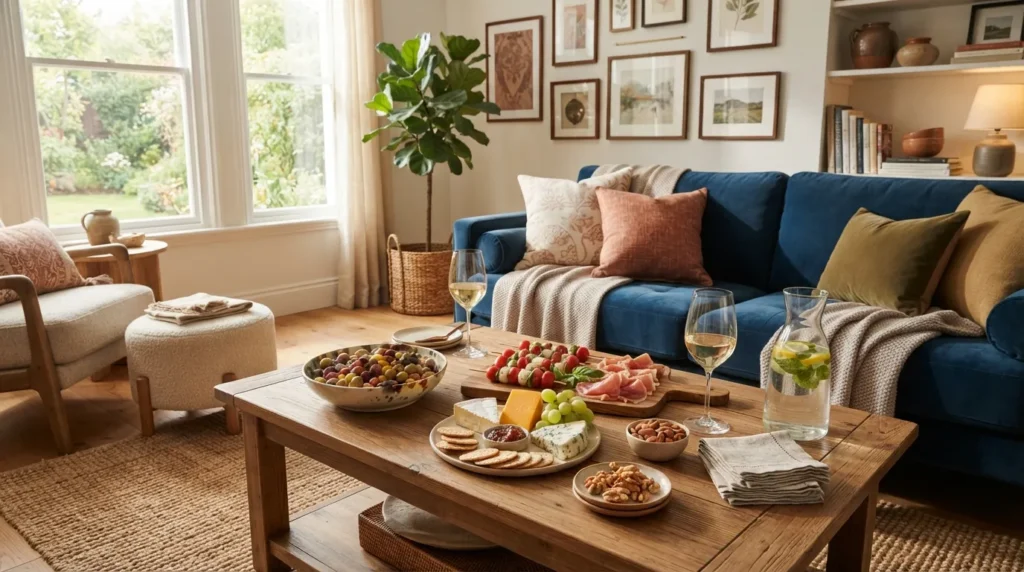
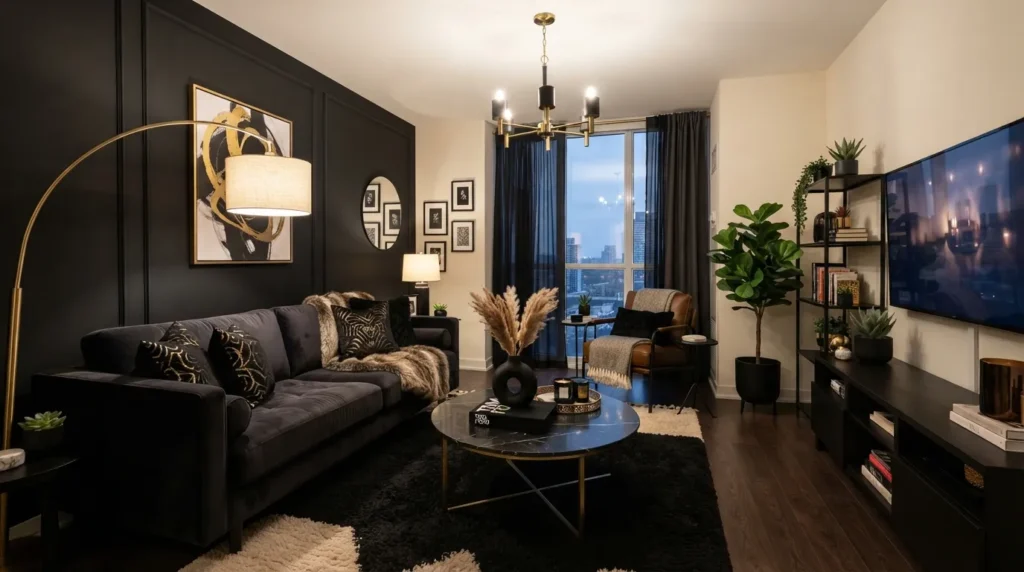
Black living room decor can make a home feel dramatic, elegant, cozy, or surprisingly peaceful. The key is not to make everything black. Instead, combine black walls, charcoal furniture, natural wood, greenery, warm lighting, soft textiles, and carefully chosen accents.
Whether you prefer modern, minimalist, boho, industrial, Scandinavian, farmhouse, Art Deco, or rustic style, black can work as a beautiful foundation. The ideas below focus on practical combinations, easy styling decisions, and realistic ways to keep a dark living room comfortable for everyday life.
1. Black Walls With Warm Natural Wood
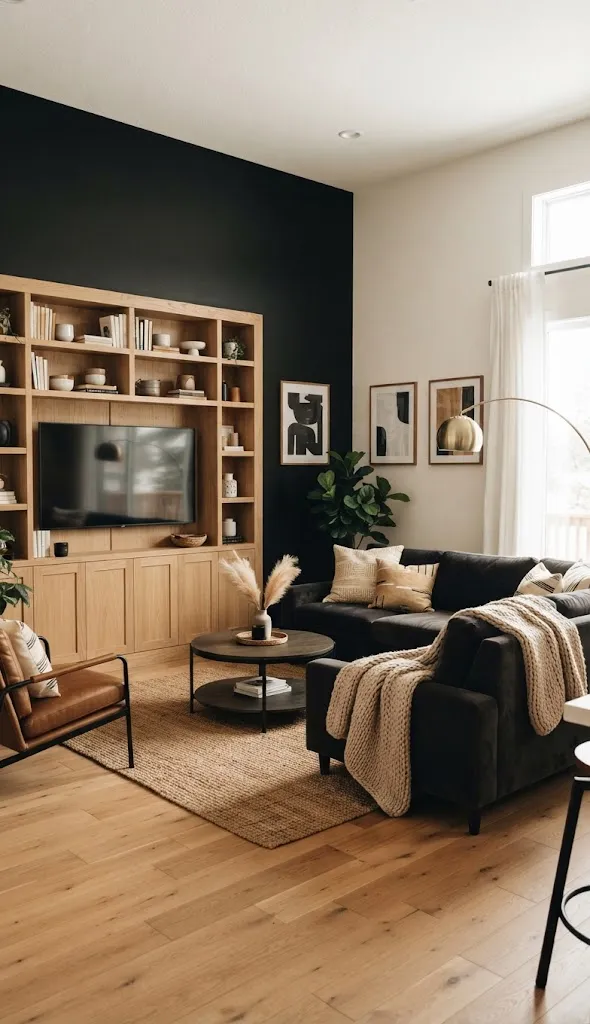
Black walls become much easier to live with when paired with natural wood. Try a chunky wooden coffee table, natural oak shelving, light wood flooring, and a few framed artworks.
Add an off-white ceiling and trim to prevent the room from becoming visually heavy. A velvet throw and metallic floor lamp can introduce softness and subtle contrast.
This combination works especially well when you want a modern black living room that still feels warm and inviting.
2. Cozy Charcoal Nook With Cream Textiles
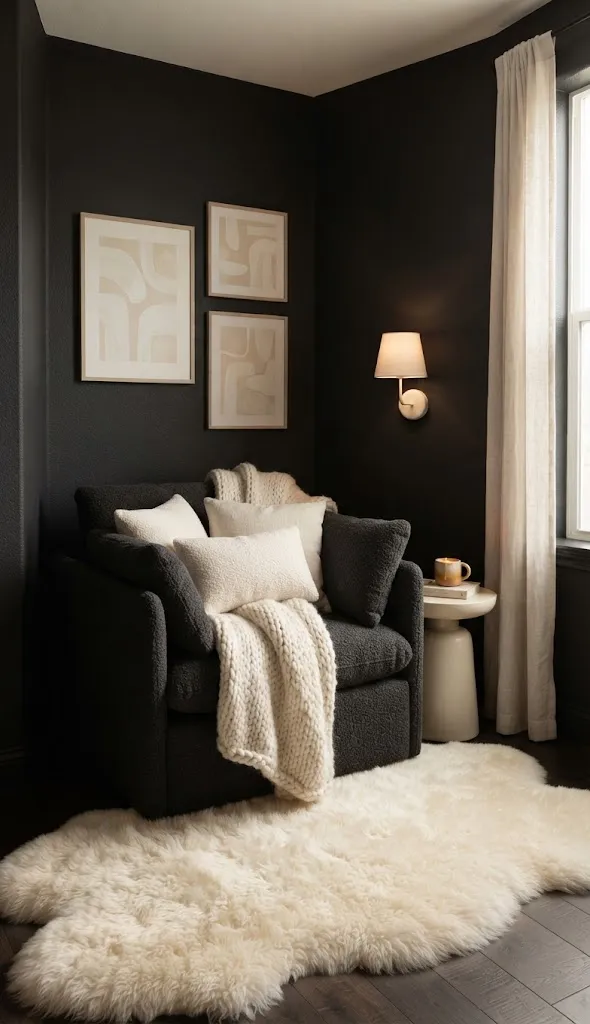
If solid black feels too dramatic, start with deep charcoal. A charcoal sofa, cream textiles, textured rug, plants, books, and a round mirror can create a comfortable reading or conversation corner.
A practical budget can be around $600–$1,200, while a more complete setup may reach about $1,300. For individual pieces, sofas can fall around $800–$1,500, lighting around $150–$400, textiles around $200–$550, and accessories around $100–$300.
3. Black and White Living Room Contrast
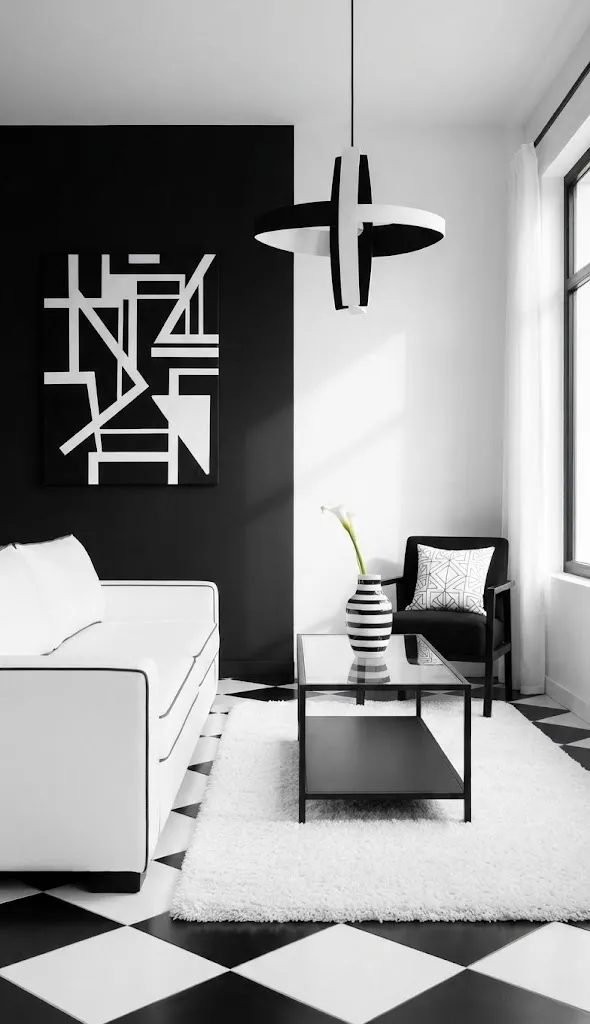
Black walls and a white sofa create one of the easiest high-contrast combinations.
Keep the flooring light or neutral, then introduce warm wood and a small amount of metal. Black-and-white artwork and a geometric rug can reinforce the graphic appearance without making the room complicated.
This is a good choice for anyone who wants a clean, modern look with very few colors.
4. Industrial Black Living Room
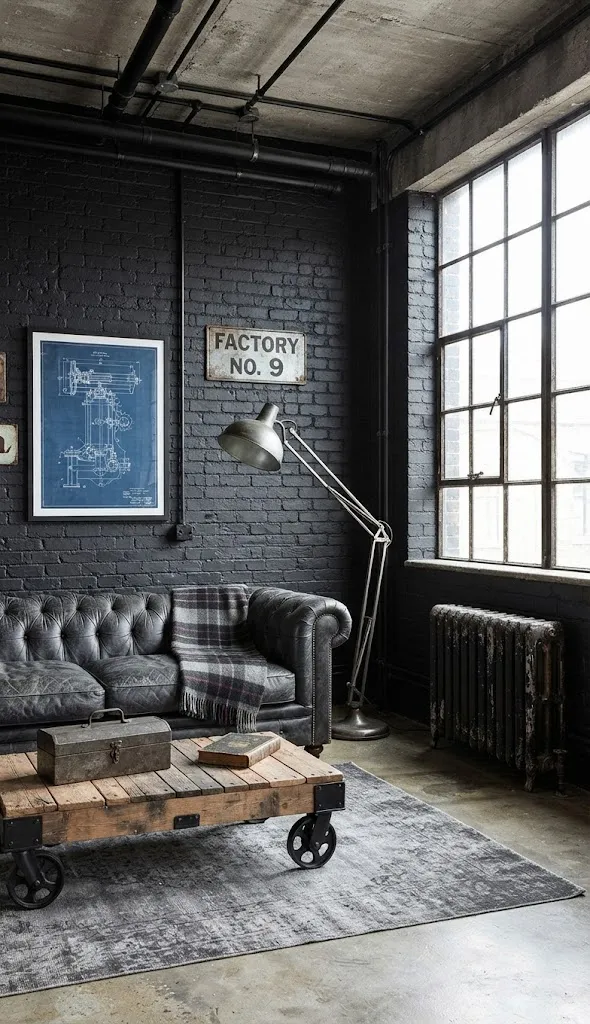
For an industrial black living room, combine black exposed brick, metal-framed windows, dark concrete flooring, pale grey seating, and white ceramics.
Large rooms can handle this look particularly well. A room of about 300 sq ft or more and a ceiling around 10 ft or higher can provide enough visual space for strong dark architectural elements. An 8 ft ceiling can still work, but lighter flooring and generous natural light can help maintain openness.
5. Black Boho Living Room With Natural Texture
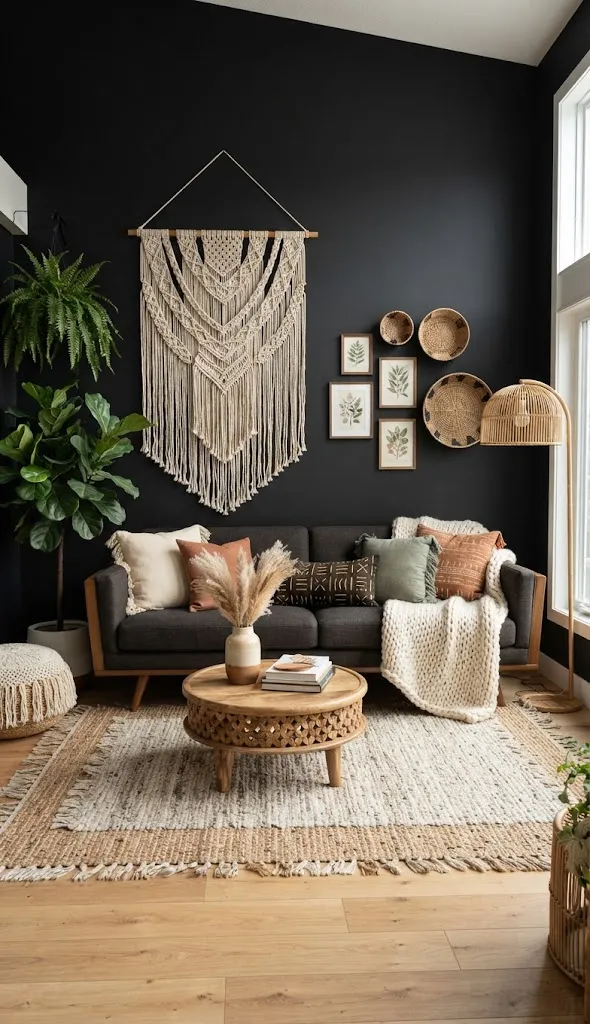
Black does not have to feel cold. Combine a matte black foundation with rattan, jute rugs, woven poufs, macramé, plants, warm white, cream, and earthy brown.
A useful styling balance is 50% matte black, 40% natural textures, and 10% green plant life.
For a more colorful version, introduce jewel tones such as sapphire or amethyst without allowing them to dominate the room.
6. Black and Gold Glamour
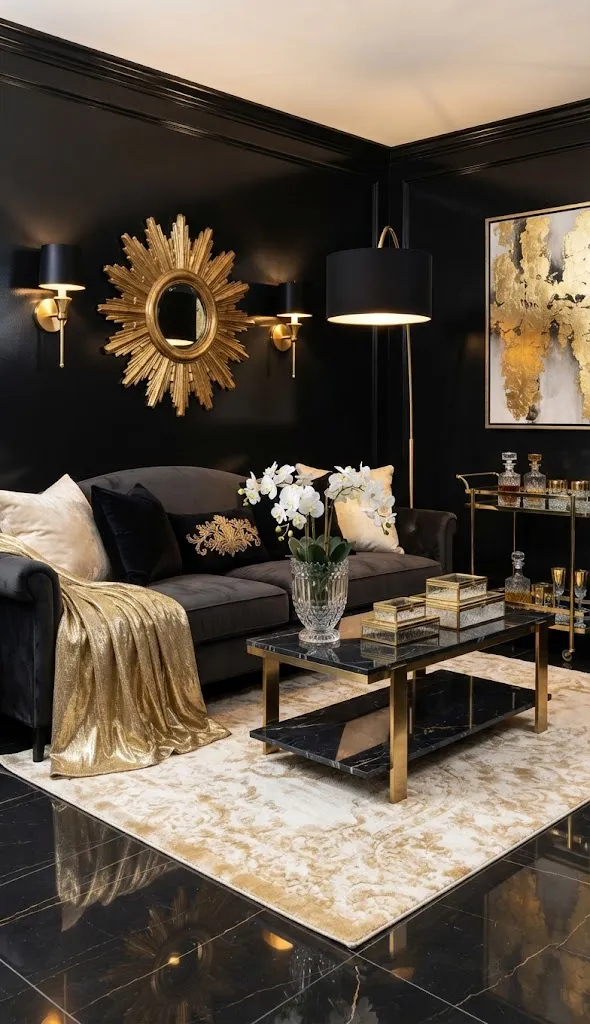
Black and gold create an elegant living room when reflective surfaces are used carefully.
Try black walls with gold-framed mirrors, gold side tables, brass details, velvet seating, and statement lighting. Emerald and sapphire can provide small color accents.
The most important part is balance. Too many reflective objects can make the room feel busy, while a few carefully positioned gold elements can make black walls look sophisticated.
7. Minimalist Black Living Room With Natural Light
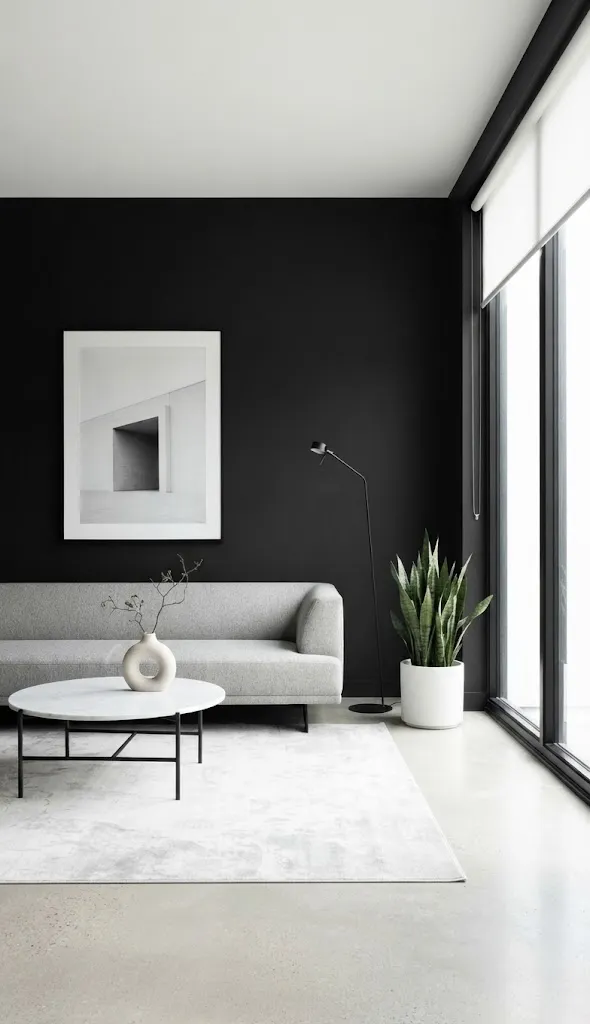
Natural light is one of the most important elements in a minimalist black living room.
Use clean furniture lines, light wood flooring, sheer curtains, sculptural furniture, and simple abstract art. Keep accessories limited and allow the windows to remain visually important.
A palette of dark charcoal, steel gray, white, earth tones, and a small muted coral accent can soften the overall appearance.
8. Textured Black Accent Wall
A textured black accent wall can add depth without requiring every wall to be dark.
Possible finishes include limewash, textured wallpaper, dark plaster, or a matte black treatment. For a DIY project, preparation may take 1–2 hours, while materials can cost around $50–$200.
A basic project can involve about 2 hours for the base coat, 3–5 hours for the texture coat, and approximately 1 hour for sealant.
Let the wall remain the main feature and keep the furniture comparatively simple.
9. Black Walls With Rattan and Greenery
For a softer boho black living room, pair black walls with rattan furniture, jute rugs, macramé, warm-white textiles, earthy brown accents, and green plants.
Plants are particularly useful because their natural shapes break up the strong lines of a dark background.
Use warm lighting rather than harsh white lighting to make the room feel more relaxed in the evening.
10. Gallery Wall Against Black Walls
A gallery wall can look especially striking against black.
Mix photographs, abstract paintings, and artwork in black, white, gold, and natural wood frames. Before hanging anything, arrange the pieces on the floor or use craft-paper templates to test the composition.
A spacing of about 2–3 inches between artwork pieces usually keeps the arrangement connected without making it feel crowded.
11. Black Walls With a White Sofa
A white sofa against black walls immediately creates a strong focal point.
Add warm wood, neutral flooring, and a few metallic details to prevent the room from looking too stark. This approach is particularly useful when you already own a light-colored sofa and want to change the atmosphere without replacing major furniture.
Use washable or durable textiles if the room receives heavy everyday use.
12. Black, Terracotta, and Olive Green
For a warmer black living room, combine deep charcoal with terracotta, olive green, sandy beige, linen, natural wood, and handmade pottery.
A simple budget can look like this: charcoal paint around $40–$60 per gallon, two linen-blend pillows around $40–$60, wood side tables around $50–$150, and a jute rug around $150–$300.
A complete earthy look can often be planned around $500–$1,000 depending on furniture and materials.
13. Art Deco Black Living Room
Art Deco works naturally with black because both styles benefit from strong geometry and contrast.
Use geometric patterns, brass, chrome, velvet, fluted furniture, mirrored surfaces, and statement lighting. Sapphire, ruby, muted green, white, and soft taupe can be used as supporting colors.
The goal is to create a polished room rather than fill every surface with decorative objects.
14. Black Walls With Cognac Leather
Black and cognac leather create a rich combination with a classic masculine feel.
A Chesterfield sofa or leather lounge chair can sit against black walls, while dark wood, landscape art, and warm lighting add depth. The result can have a relaxed speakeasy-inspired character without becoming overly formal.
Add a soft rug or textured throw to balance the harder surfaces.
15. Scandi Noir Black Living Room
Scandinavian design can work beautifully with black when warmth remains a priority.
Combine a black accent wall with natural or blonde wood, a grey linen sofa, white walls, black shelving, and simple comfortable furniture. Cream beige, light gray, dark bronze, and aged gold can provide subtle contrast.
Keep the room uncluttered and allow natural materials to provide most of the visual interest.
16. Black and Velvet Textural Drama
Velvet gives black rooms a softer and richer appearance.
Try an emerald, sapphire, or plum velvet sofa with black walls, silk pillows, a faux-fur throw, and a patterned rug. Directional lighting can highlight the different textures.
For wall-focused lighting, lamps or fixtures can be positioned roughly 8–12 inches from the wall when the design calls for close illumination.
17. Modern Farmhouse With Matte Black
Modern farmhouse style does not need to rely entirely on white.
Try matte black shiplap, a distressed wood mantel, cream slipcovered sofas, linen, natural wood, and industrial lighting. Dark walnut brown, stone gray, charcoal, faded gold, and warm taupe can complete the palette.
This combination keeps the farmhouse character while giving the room a more contemporary appearance.
18. Statement Black Fireplace Wall
A black fireplace can become the natural centerpiece of the living room.
Paint the fireplace wall or hearth black and surround it with neutral walls, sculptural vases, simple artwork, or natural materials. A brick fireplace can also become a dramatic focal point with the right finish.
For a DIY update, preparation may take 1–2 hours. Paint materials can cost around $40–$80, primer may require another 1–2 hours, and painting can take about 2–4 hours. Two or three thin coats can provide more even coverage than one heavy coat.
19. Global Fusion Black Living Room
Black provides an excellent backdrop for global-inspired materials.
Combine Indian hand-loomed textiles, Moroccan poufs, African carved wood, Mexican ceramics, brass, copper, and Japanese-inspired elements.
A useful balance is 40% grounding black, 30% earthy or jewel-toned textiles, 20% warm natural wood and leather, and 10% metallic accents.
Choose meaningful pieces rather than filling the room with unrelated decorations.
20. Black Bookshelf Wall
A black bookshelf wall can turn storage into a major design feature.
Use books, plants, sculptures, framed photographs, and small decorative objects to create visual variety. IKEA Billy Bookcases can also be painted black and trimmed to create the appearance of built-in shelving.
Leave some shelf space empty. Negative space helps the collection look intentional rather than crowded.
21. Mid-Century Modern Black Living Room
Black works as a dramatic backdrop for Mid-Century Modern furniture.
Use teak or walnut, tapered-leg sofas, sculptural armchairs, credenzas, and simple geometric forms. Olive green and burnt orange can add restrained color.
The combination works because the dark background allows warm wood tones and distinctive furniture silhouettes to stand out.
22. Black and Cream Serenity
For a calmer look, combine black with cream and ivory rather than strong white.
Add plush rugs, soft furnishings, natural wood, and brushed brass. Dark gray, taupe, light tan, deep umber, and soft beige can bridge the contrast between the darkest and lightest elements.
This is an excellent approach when you want a black living room that feels cozy rather than dramatic.
23. Urban Jungle Black Living Room
Plants can become the main visual feature of a black living room.
Use black walls behind large leafy plants, rattan planters, wooden furniture, macramé plant hangers, and warm lighting. The contrast between dark walls and natural green leaves creates a strong biophilic effect.
Place plants where they receive suitable natural light, and vary their height to create a layered composition.
24. Black Stone or Concrete Feature Wall
A black stone or concrete wall can create architectural drama without relying on many decorative objects.
Pair the feature wall with minimalist furniture, raw wood, polished metal, recessed wall washers, and uplights. Texture becomes the main decoration.
This approach is particularly effective in modern interiors where the architecture itself should remain the focal point.
25. Monochromatic Black and Grey
A monochromatic palette can be easier to style than a room with many colors.
Try approximately 60% deep charcoal or black, 30% mid-grey, and 10% crisp white or warm metallic accents.
Use a charcoal wall, grey sofa, dark textiles, a plush rug, black-and-white photography, and a leather chair. A knitted throw can introduce another layer of texture without adding a new color.
26. Black Ceiling With Light Walls
A black ceiling can create a cozy, intimate atmosphere while allowing the walls to remain light.
This idea works especially well with ceiling moldings, suitable light fixtures, aged brass, deep hunter green, taupe gray, and pale cream.
The black ceiling can visually recede when lighting is planned correctly, making it an interesting option for Dark Academia-inspired interiors.
27. Black With Jewel-Tone Accents
Emerald green velvet, sapphire blue, and amethyst can bring personality to a black room.
Keep the walls or larger furniture pieces black, then introduce jewel tones through one sofa, chair, cushions, artwork, or small accessories.
Warm layered lighting is essential. Wall sconces, floor lamps, uplights, and dimmers can make the same room feel different throughout the day.
28. Rustic Black Cabin Living Room
Black walls can work beautifully with rustic materials.
Combine rough-hewn timber, a stone fireplace, a leather sofa, chunky knit throws, wool blankets, and warm wood. Dark charcoal, slate gray, goldenrod, silver metallic, and deep garnet can provide restrained accents.
This style can also overlap naturally with Dark Academia and Cottagecore when books, vintage pieces, and soft textiles are introduced.
29. Black-and-White Photography Wall
A black-and-white photography collection is an affordable way to decorate a dark wall.
Use framed prints with black, white, or natural wood frames. Photographs can include landscapes, architecture, portraits, or abstract compositions.
A complete photography wall can sometimes be created for under $100 by combining affordable frames and printable artwork.
30. Black Living Room With Layered Warm Lighting
Lighting can determine whether a black living room feels welcoming or gloomy.
Instead of relying on one ceiling fixture, layer floor lamps, table lamps, wall sconces, fireplace light, and indirect illumination. Warm lighting works particularly well with black walls, wood, leather, velvet, stone, and greenery.
During the day, prioritize natural light. At night, use several smaller light sources so the room does not become a single dark block.
How to Make a Black Living Room Feel Larger
A black living room does not automatically make a space feel smaller. The result depends on how the dark surfaces interact with light, furniture, and visual space.
Use large windows, sheer curtains, light flooring, mirrors, natural wood, and uncluttered furniture. Keep pathways open and avoid placing too many dark objects together in one area.
If the room has an 8 ft ceiling, a black ceiling may feel more dramatic, so consider keeping the walls lighter or using strong vertical lines to create visual height.
How Many Colors Should You Use?
You do not need a complicated color scheme.
A simple black living room can use black or charcoal as the foundation, a light neutral such as cream or ivory for balance, and one accent color such as olive green, emerald, cognac, sapphire, terracotta, or burnt orange.
Natural materials such as wood, leather, rattan, stone, and jute can function as visual texture rather than additional competing colors.
How to Mix Black With Natural Materials
Natural materials are among the easiest ways to soften black.
Natural wood adds warmth, leather introduces character, rattan creates a lighter texture, jute adds softness, stone provides architectural depth, and greenery brings organic color.
Instead of using all of these at once, select two or three materials and repeat them throughout the room.
How to Style a Black Living Room on a Budget
You do not need to redesign the entire room.
Start with one black accent wall, then add affordable artwork, cushions, plants, a rug, or a small side table. A photography wall can sometimes cost under $100, while an earthy black-and-neutral look can be planned around $500–$1,000 depending on what you already own.
Paint is often the simplest starting point because it can dramatically change the atmosphere without requiring new furniture.
Common Mistakes to Avoid
Avoid making every surface the same shade of black. Different textures and tones create much more depth.
Do not block natural light with heavy curtains if the room already has limited daylight.
Avoid adding too many decorative objects simply because the walls are dark. Black provides enough visual drama on its own.
Do not rely on one harsh overhead light. Layered lighting usually makes dark interiors more comfortable.
Finally, avoid mixing too many design styles at once. Choose one primary direction, such as modern, boho, industrial, Scandinavian, farmhouse, Art Deco, Mid-Century Modern, or rustic, and then borrow small elements from another style.
A Simple Black Living Room Formula
If you are unsure where to begin, use this straightforward formula:
Start with black or charcoal as the main foundation.
Add natural wood for warmth.
Introduce cream, ivory, or light gray to create contrast.
Choose one accent color such as emerald, olive, terracotta, cognac, or sapphire.
Add greenery or natural materials for softness.
Finish with warm, layered lighting.
This approach keeps the room visually balanced without requiring complicated decorating rules.
Final Thoughts
Black living room decor can be surprisingly versatile. It can create a modern apartment, a cozy reading nook, an industrial loft, a Scandinavian-inspired space, an elegant Art Deco room, a rustic cabin, or a plant-filled urban retreat.
The most successful designs usually balance dark surfaces with natural light, warm wood, comfortable textiles, greenery, artwork, and layered lighting. Whether you choose one black accent wall or build an entire black-and-charcoal palette, start with the elements you already own and add contrast gradually.
The goal is not simply to make the living room darker. It is to use black as a foundation for warmth, texture, personality, and everyday comfort.