10+ Bedroom Decor Ideas
A well-decorated bedroom should feel comfortable, practical, and personal. The best bedroom decor does not depend on filling the room with expensive furniture or following one particular style. Instead, it comes from balancing colour, furniture placement, lighting, texture, storage, and comfort. Whether you prefer a minimalist look, a cozy natural space, a modern setup, or a more luxurious bedroom, the right design choices can make the room feel more relaxing and visually complete. These 10+ bedroom decor ideas combine practical interior principles with inspiring design elements to help you create a space that looks good and works well every day.
1. Start With a Balanced Bedroom Layout
Before choosing colours or accessories, consider how the room will function. Think about your daily needs, the size of the bedroom, and the furniture you actually require. A comfortable layout should leave approximately 60–70 cm of walking space around important furniture areas where possible, helping the room feel easier to move through rather than crowded.
The bed usually works best as the main focal point. In larger bedrooms, placing it against a central wall with bedside furniture on each side can create a balanced appearance. Smaller bedrooms may benefit from a corner bed, wall-mounted storage, or furniture that performs more than one function. If the room includes enough space, you can also create separate sleeping, dressing, or sitting zones without disrupting the overall flow.
2. Use the 60-30-10 Colour Rule
Choosing colours becomes easier when you use a simple balance. The 60-30-10 rule gives the room a clear visual structure: around 60% of the space uses the dominant colour, 30% uses a secondary colour, and 10% is reserved for accent details.
Soft neutrals such as beige, cream, taupe, light grey, and white can create a calm foundation. For a more colourful bedroom, blue-grey, pale pink, lavender, mint, dark green, navy, or jewel tones can add personality. The smaller 10% accent area can come from cushions, artwork, lamps, throws, metallic finishes, or a feature wall. This approach helps the room feel coordinated without making every surface look identical.
3. Make the Bed the Main Decorative Feature
The bed naturally attracts attention, so it can become the strongest decorative element in the room. A statement headboard, upholstered design, wooden frame, canopy, or four-poster style can give the bedroom a clear identity.
For a more luxurious appearance, layer the bedding with quality sheets, a duvet or comforter, blankets, throws, and decorative cushions. Mixing materials such as cotton, linen, silk, and velvet can add depth while keeping the sleeping area comfortable. The goal is not to overload the bed with accessories but to create visible layers that still feel practical for everyday use.
4. Layer Different Textures for a More Comfortable Look
Texture can make even a neutral bedroom feel warmer and more interesting. Combining smooth, soft, natural, and structured materials prevents the room from looking flat.
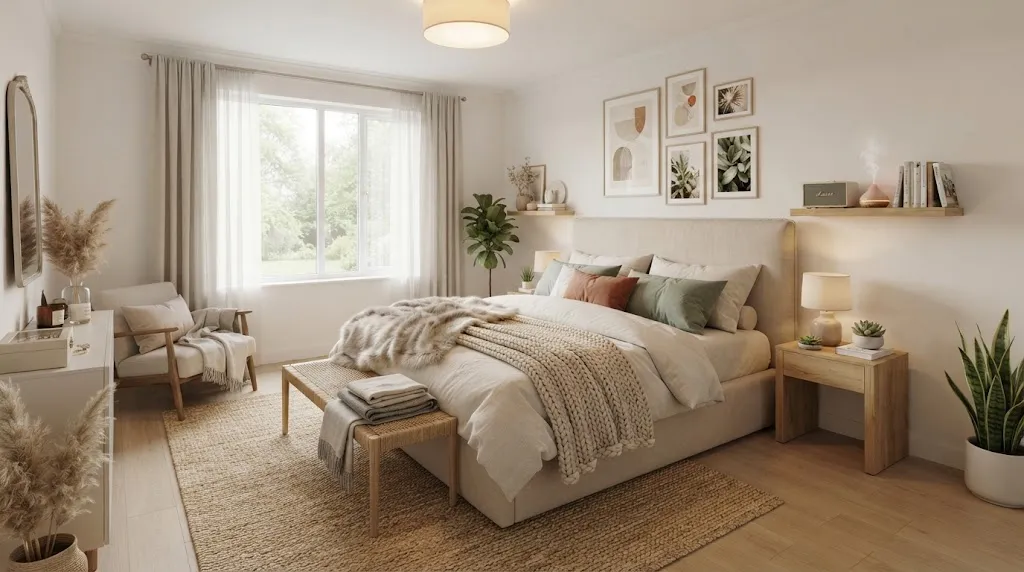
Velvet cushions can sit alongside linen bedding, while a plush rug can soften a wooden or stone floor. Cotton blankets, woven textiles, wall hangings, silk details, and natural-fibre rugs can add variety without requiring major renovations. A successful bedroom usually repeats a few complementary textures rather than introducing too many competing materials.
5. Create a Relaxing Lighting Plan
Lighting has a major effect on how a bedroom feels at different times of the day. Instead of relying on one ceiling fixture, use layered lighting that supports several activities.
Warm ambient lighting can create a calmer evening atmosphere, while bedside lamps or wall-mounted sconces provide focused light for reading. Pendant lights can save bedside surface space, and subtle LED strips or decorative fairy lights can add visual interest. Dimmable lighting is particularly useful because the brightness can be adjusted depending on whether you are getting ready, reading, or relaxing before sleep.
Natural daylight should also be considered. Large windows, sheer coverings, blinds, and curtains can help you control both brightness and privacy.
6. Add Smart and Space-Saving Storage
Storage should support the decor instead of becoming visual clutter. Storage beds, built-in wardrobes, drawers, floating shelves, window seats, and wall-mounted units can help make better use of available space.
In a small bedroom, lighter colours and mirrors can visually open up the room, while multifunctional furniture reduces the number of separate pieces required. Hidden storage is especially useful for keeping everyday items out of sight. The result is a cleaner environment where decorative elements have more visual impact.
7. Bring Natural Materials Into the Bedroom
Natural elements can make a bedroom feel warmer and more grounded. Wood, stone, rattan, cotton, linen, and woven fibres work well in both simple and luxurious interiors.
A wooden bed frame or bedside table can introduce warmth, while natural-fibre rugs, textured curtains, and indoor plants add softness and variation. Small bedside plants, succulents, or larger floor plants can also bring colour into a neutral space. Natural materials work particularly well when combined with daylight and a restrained colour palette.
8. Add Personality With a Feature Wall and Art
A feature wall can give the bedroom a strong focal point without requiring every wall to be heavily decorated. Wallpaper, textured paint, wood panelling, decorative moulding, or a bold colour can create contrast behind the bed.
Artwork, framed photographs, prints, or a carefully arranged gallery wall can make the room feel more personal. For a softer visual effect, choose colours that connect with the bedding or accent pieces. In smaller rooms, one carefully chosen large mirror can also reflect natural light and create a greater sense of openness.
9. Use Window Treatments to Control Light and Privacy
Curtains, blinds, shutters, sheer panels, and blackout drapes can all change the appearance and function of a bedroom. Floor-to-ceiling curtains can create a more elegant and visually taller space, while sheer fabrics allow daylight to enter without leaving the room completely exposed.
For a more luxurious look, layer lighter window coverings with heavier curtains. This gives greater control over brightness and privacy while adding texture around the windows. The style should complement the rest of the bedroom rather than becoming an unrelated decorative element.
10. Add Subtle Luxury Through Materials and Finishes
A luxurious bedroom does not always require a complete high-end redesign. Small improvements in materials and finishes can make a noticeable difference. Quality bedding, a comfortable mattress, a well-designed headboard, solid wood furniture, leather or velvet upholstery, and carefully selected metal details can elevate the overall appearance.
Gold, brass, silver, chrome, copper, or rose-gold accents can work as small highlights on lamps, mirrors, handles, or decorative accessories. The key is moderation. A few repeated finishes usually look more refined than mixing many metallic styles throughout the room.
11. Consider Smart Technology Without Creating Visual Clutter
Modern bedroom decor can include technology while still maintaining a peaceful appearance. Smart lighting, automated curtains, wireless charging stations, voice-controlled devices, and concealed cables can improve convenience without dominating the room.
Hidden technology works especially well when televisions, charging areas, and electronic accessories are integrated into cabinetry or storage. Keeping visible wires and devices to a minimum helps preserve the clean, relaxing atmosphere that most bedrooms need.
12. Finish With Small Details That Support Relaxation
The final layer of bedroom decor comes from smaller sensory and decorative details. Soft cushions, a comfortable rug, fresh flowers, indoor plants, subtle fragrances, and calming colours can make the room feel more inviting.
You do not need to fill every empty surface. A bedroom usually feels more relaxing when decorative pieces have space around them. Choose a few meaningful accessories, keep storage organised, and allow the bed, lighting, colours, and textures to remain the main focus.
How to Choose the Right Bedroom Decor Style
The right style depends on both personal taste and how the room is used. Minimalist bedrooms work well with clean lines, neutral colours, simple furniture, and uncluttered surfaces. Scandinavian-inspired spaces often combine light walls, wooden furniture, soft fabrics, and functional design.
For a warmer and more relaxed look, natural materials, layered blankets, woven rugs, rattan, and plants can create a cozy atmosphere. A darker bedroom can use navy, charcoal, deep green, or black alongside warm lighting and soft textures. If you prefer a more luxurious appearance, focus on quality bedding, statement furniture, layered curtains, upholstered surfaces, and carefully selected metallic accents.
Final Thoughts
The most successful bedroom decor combines beauty with everyday comfort. Start with a practical layout, maintain useful walking space, and use the 60-30-10 colour balance to create a coordinated foundation. From there, build the room gradually through layered bedding, comfortable textures, flexible lighting, smart storage, natural materials, and personal decorative details.
You do not need to use every idea at once. Choosing a few elements that suit your room size, lifestyle, and preferred atmosphere can create a bedroom that feels organised, stylish, and genuinely relaxing.