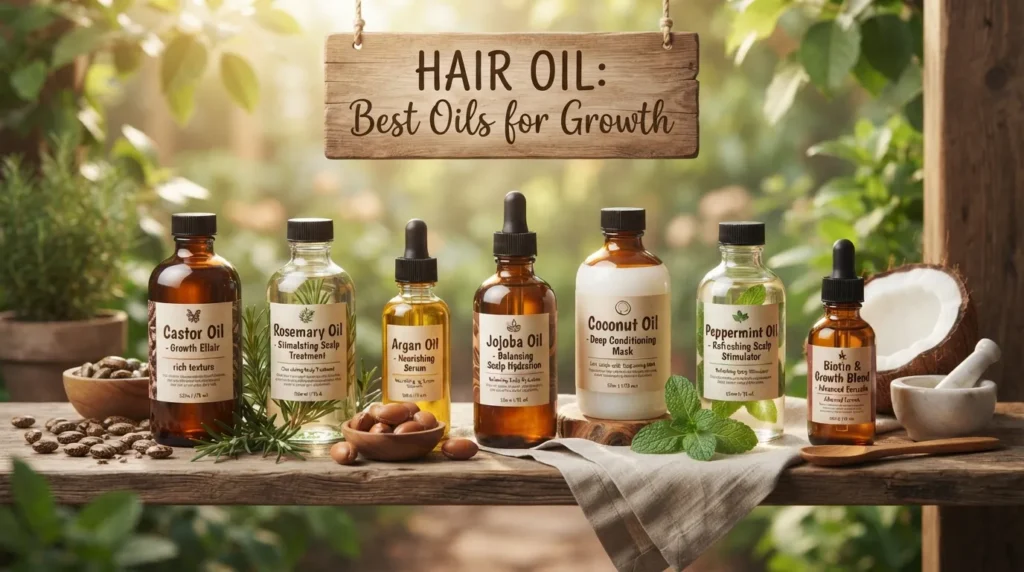
Hair Oil can help support smoother, shinier, healthier-looking hair when you choose an oil that matches your hair and scalp needs. From coconut and castor oil to rosemary, argan, amla, and bhringraj, different oils offer different benefits. This guide explains 20 practical Hair Oil choices and simple ways to use them.
How to Choose the Right Hair Oil
The best Hair Oil depends on your main concern rather than simply choosing the most popular option. Dry or damaged hair may need a richer oil, while fine or oily hair generally benefits from a lighter approach.
Hair type also matters. MyHair’s guidance connects coconut oil with dry or damaged hair, argan oil with frizz, rosemary oil with scalp care, lightweight oils such as jojoba with fine hair, and heavier oils such as castor oil with coarse hair.
A simple routine is often enough. Apply Hair Oil before shampooing, massage it gently into the scalp when appropriate, and focus heavier oils mainly on lengths and ends when your hair needs extra moisture.
20 Hair Oil Choices for Different Hair Needs
1. Coconut Oil for Dry and Damaged Hair
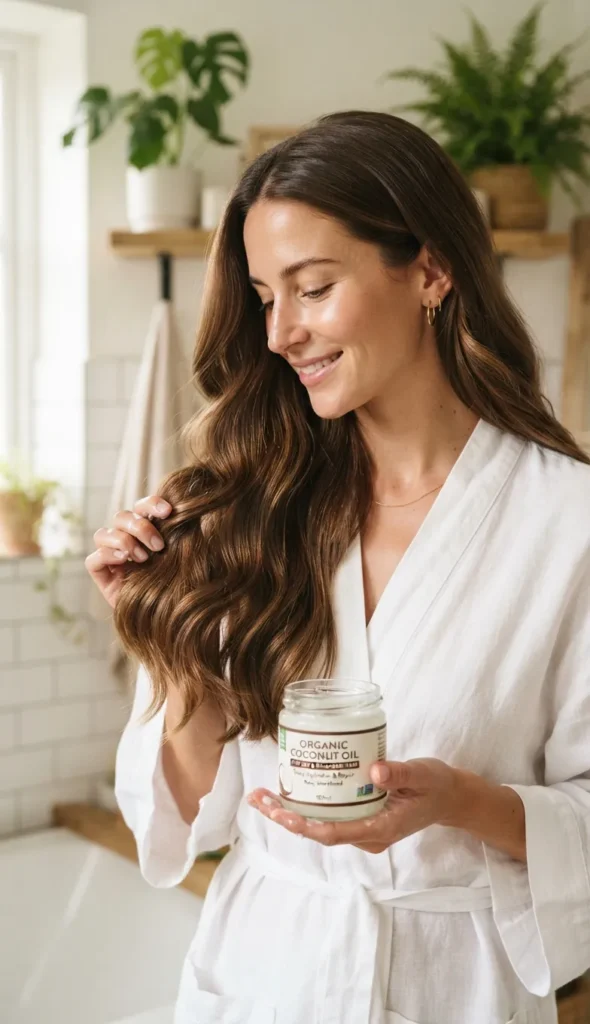
Coconut oil is one of the most versatile Hair Oil choices in this guide. It is associated with moisture, stronger hair fibers, reduced breakage, and protection against damage from heat styling.
It can be especially useful when hair feels dry, rough, or fragile. LoungeAura also highlights coconut oil for moisture, dryness, split ends, and hair growth.
For a simple routine, apply a moderate amount before shampooing and concentrate on areas that feel particularly dry.
2. Castor Oil for Thickness and Hair Growth
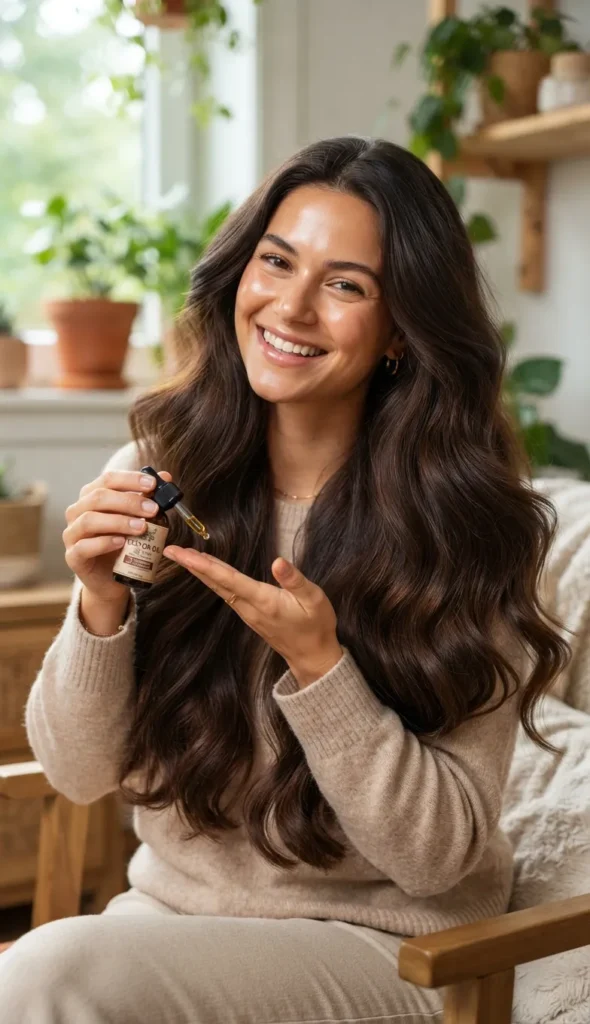
Castor oil is commonly positioned around thickness, nourishment, and hair-growth-focused routines. LoungeAura specifically connects it with thicker-looking hair and follicle stimulation.
Its heavier consistency can make it more suitable for coarse or dry hair than very fine hair. MyHair also places castor oil among its seven main natural-oil recommendations.
Because it is thick, a smaller amount can be easier to manage than applying a large quantity.
3. Argan Oil for Shine and Frizz
Argan oil is a strong choice when the main goal is smoother, shinier hair. It is associated with moisture, frizz control, gloss, and protection for dry lengths.
LoungeAura recommends argan oil for shine, while MyHair connects it with frizzy hair and recommends applying a few drops to damp hair, particularly through the mid-lengths and ends.
It can work well when hair needs softness without the heavier feel associated with castor oil.
4. Almond Oil for Glossy Hair
Almond oil is highlighted by LoungeAura as a Hair Oil option for shine. It can help coat the hair, lock in moisture, reduce frizz, and create a smoother-looking finish.
This makes almond oil more relevant to people whose priority is appearance and softness rather than a dedicated growth routine.
Using a small amount can help prevent the hair from feeling unnecessarily heavy.
5. Jojoba Oil for Fine Hair
Jojoba oil is particularly useful in hair-type matching because MyHair identifies lightweight oils such as jojoba as an option for fine hair.
LoungeAura also includes jojoba among oils that can support shine and moisture.
For fine hair, keeping the amount small is important. Concentrating the oil on the lengths and ends can provide a smoother finish without making the roots feel overly oily.
6. Avocado Oil for Dry Hair
Avocado oil is highlighted by LoungeAura for dry hair and moisture support. It is also connected with reducing breakage and split ends.
This makes it a practical option when hair feels dry throughout the lengths or when frequent styling has left the ends looking rough.
A pre-shampoo application can be a straightforward way to incorporate avocado oil into a routine.
7. Tea Tree Oil for Scalp Care
Tea tree oil is discussed by LoungeAura in relation to dandruff and scalp irritation. It is therefore more focused on scalp care than on making the hair lengths glossy.
Because scalp-focused oils can be potent, a gentle approach is preferable. LoungeAura places tea tree oil within its broader scalp-care recommendations rather than treating it as a universal solution for every hair concern.
8. Peppermint Oil for the Scalp
Peppermint oil is associated with scalp circulation, a cooling sensation, potential follicle stimulation, and reduced scalp inflammation in MyHair’s guide.
LoungeAura also includes peppermint oil among oils discussed for scalp and hair-care needs.
MyHair recommends using a few drops with a carrier oil such as coconut or jojoba rather than applying it as a concentrated oil.
9. Rosemary Oil for Hair Growth
Rosemary oil is one of the strongest growth-focused oils in the provided research. MyHair connects it with scalp circulation, hair follicles, natural scalp-oil balance, inflammation reduction, and dandruff prevention.
LoungeAura also associates rosemary oil with thicker hair and follicle stimulation.
For a simple routine, MyHair recommends mixing a few drops with a carrier oil such as coconut or jojoba and gently massaging the mixture into the scalp.
10. Bhringraj for Ayurvedic Hair Care
Bhringraj is one of LoungeAura’s featured Ayurvedic hair oils. It is presented as a traditional option for nourishing the hair and scalp, reducing hair fall, and supporting overall hair health.
It may appeal to people specifically interested in Ayurvedic Hair Oil routines rather than modern styling oils.
The focus here is broader hair and scalp nourishment rather than a single cosmetic benefit such as shine.
11. Amla for Traditional Hair Care
Amla is another Ayurvedic oil highlighted by LoungeAura. It is associated with nourishing the hair, supporting scalp health, and reducing hair fall.
It fits naturally into a traditional hair-care routine where the goal is general nourishment rather than targeted styling.
Amla can therefore be considered when someone wants an oil centered on traditional hair and scalp care.
12. Sesame Oil for Ayurvedic Hair Care
Sesame oil appears alongside bhringraj and amla in LoungeAura’s Ayurvedic hair-oil discussion.
Its role in the article is connected with nourishing hair, supporting scalp health, and reducing hair fall.
For people interested in traditional Hair Oil routines, sesame oil provides another option alongside the other Ayurvedic oils discussed in the guide.
13. Coconut and Castor Oil for Growth
Coconut oil and castor oil are both repeatedly connected with growth-focused Hair Oil routines.
LoungeAura identifies coconut and castor oil among its preferred oils for growth, while castor oil receives additional attention for thickness.
The two oils also represent different textures: coconut oil is discussed strongly around moisture and damage, while castor oil is heavier and more associated with thickness.
14. Argan and Almond Oil for Shine
Argan oil and almond oil are particularly useful to consider when shine is the main goal.
LoungeAura connects both with coating strands, moisture, reduced frizz, and improved gloss. Argan oil also receives strong attention from MyHair for frizzy hair.
A small amount can be enough when the goal is a polished appearance rather than deep oiling.
15. Jojoba and Avocado Oil for Moisture
Jojoba and avocado oil offer two different approaches to moisture.
Jojoba is described as a lightweight choice for fine hair, while avocado oil is highlighted for dry hair and reducing breakage.
This makes the pair useful when choosing based on hair texture: fine hair may lean toward jojoba, while particularly dry hair may benefit more from the richer avocado-oil approach.
16. Rosemary and Peppermint Oil for Scalp Routines
Rosemary and peppermint oil are both connected with scalp-focused care.
Rosemary is emphasized for circulation, follicles, scalp-oil balance, inflammation, and growth-focused routines. Peppermint is associated with circulation, cooling, potential follicle stimulation, and scalp inflammation.
MyHair recommends diluting peppermint oil with coconut or jojoba and using a similar carrier-oil approach for rosemary.
17. Castor and Rosemary Oil for Thicker-Looking Hair
Castor oil and rosemary oil are the strongest combination in the provided research for people focused on thickness.
LoungeAura specifically mentions castor and rosemary oils for stimulating follicles and reducing thinning. MyHair also places rosemary among its main growth-oriented oils.
Rather than using a large quantity, keeping the routine simple and consistent is more practical.
18. Coconut and Jojoba Oil as Carrier Oils
Coconut oil and jojoba oil are especially useful because MyHair recommends them as carrier oils for rosemary and peppermint.
Coconut oil offers a richer option, while jojoba is identified as a lightweight oil suitable for fine hair.
This gives users a simple way to adapt an oil routine according to hair texture without adding unnecessary products.
19. Argan and Jojoba Oil for Frizz
Argan and jojoba oil can be considered when frizz and lack of smoothness are the main concerns.
Argan oil is directly associated with frizz control and nourishment, while jojoba is described as a lightweight option that can support moisture and shine.
Using a small amount through the mid-lengths and ends can help create a smoother-looking finish.
20. Amla, Bhringraj, and Sesame Oil for Traditional Care
Amla, bhringraj, and sesame oil form the main Ayurvedic group highlighted by LoungeAura.
They are presented as traditional choices for nourishing the hair and scalp, supporting scalp health, and reducing hair fall.
This group is particularly relevant for readers looking for traditional Hair Oil options rather than styling-focused oils designed primarily for shine or frizz.
How Often Should You Use Hair Oil?
LoungeAura recommends Hair Oil about 2–3 times per week for most hair types. The ideal frequency can still vary according to hair texture, scalp condition, and how easily the hair becomes oily.
A lighter routine may be more comfortable for fine or oily hair, while dry or damaged hair may tolerate a richer pre-shampoo treatment.
How Long Should Hair Oil Stay on the Hair?
LoungeAura suggests leaving oil on the hair for at least 30 minutes. It also mentions overnight application as an alternative for deeper nourishment.
For an oil massage, the page suggests about 1 hour.
There is no need to assume that leaving oil on for longer will always produce better results. A routine that is comfortable and easy to repeat can be more useful than an unnecessarily long treatment.
Should You Apply Hair Oil Before Shampoo?
Yes. Applying Hair Oil before shampoo is one of the main methods recommended in LoungeAura’s guide.
A pre-shampoo routine can be particularly convenient when using richer oils such as coconut, castor, or avocado oil because shampoo can then be used afterward to cleanse the hair.
For lighter oils such as jojoba or argan oil, a smaller amount may also be used on lengths and ends depending on the desired finish.
Hair Oil for Men
Hair Oil is not limited to one age group or gender. LoungeAura specifically includes men’s hair among its content angles.
Men can choose the oil according to the same basic concerns: dryness, shine, scalp care, thickness, frizz, or damaged hair.
For example, rosemary and castor oil are discussed around growth and thickness, while argan and jojoba oil are more useful when smoothness, shine, and frizz are the main concerns.
Hair Oil for Different Hair Concerns
If your main concern is dry or damaged hair, coconut and avocado oil are among the most relevant choices in the provided research.
For shine, argan and almond oil stand out.
For fine hair, jojoba is the lightweight option highlighted by MyHair.
For coarse hair, castor oil is identified as a heavier choice.
For scalp-focused routines, rosemary, tea tree, and peppermint oil receive the most attention.
For traditional Ayurvedic care, bhringraj, amla, and sesame oil are the primary options discussed by LoungeAura.
Simple Hair Oil Application Routine
Start with a small amount of the oil that matches your hair concern.
If you are using a scalp-focused oil routine, gently massage the scalp rather than rubbing aggressively.
For lengths and ends, spread the oil evenly and concentrate on dry areas.
LoungeAura suggests a minimum of 30 minutes before shampooing, while an overnight routine is another option.
For a massage routine, about 1 hour is suggested.
Most hair types can follow an oil routine 2–3 times per week, although lighter or less frequent use may be more comfortable for oily or fine hair.
10 Frequently Asked Questions
1. What is the best Hair Oil for hair growth?
Coconut oil, castor oil, and argan oil are the three options LoungeAura recommends in its growth-focused FAQ. Rosemary oil is also strongly associated with growth and scalp care in the provided research.
2. How often should I use Hair Oil?
LoungeAura recommends using Hair Oil 2–3 times per week for most hair types. Your ideal frequency can vary depending on whether your hair is fine, coarse, dry, or oily.
3. How long should I leave Hair Oil on?
LoungeAura recommends at least 30 minutes. It also mentions overnight use for deeper nourishment and about 1 hour for an oil massage.
4. Which Hair Oil is best for dry hair?
Coconut oil and avocado oil are the main options highlighted for dry hair. Coconut oil is also associated with reducing damage, breakage, and split ends.
5. Which Hair Oil is best for shiny hair?
Argan oil, almond oil, and jojoba oil are the strongest shine-focused options in the provided research. They are associated with moisture, smoother strands, reduced frizz, and gloss.
6. Which Hair Oil is suitable for fine hair?
Jojoba oil is the clearest choice in the provided research because MyHair identifies lightweight oils such as jojoba for fine hair.
7. Which Hair Oil is suitable for coarse hair?
Castor oil is identified by MyHair as a heavier oil suitable for coarse hair. Its thicker consistency also makes it different from lighter options such as jojoba.
8. Can I use rosemary oil directly on my scalp?
MyHair recommends mixing a few drops of rosemary oil with a carrier oil such as coconut or jojoba and gently massaging it into the scalp.
9. Should Hair Oil be applied before shampoo?
Yes. LoungeAura recommends applying oil before shampoo. This can be especially convenient when using richer oils that may otherwise leave the hair feeling heavy.
10. Can men use Hair Oil?
Yes. Hair Oil can be selected according to hair and scalp needs rather than gender. LoungeAura specifically includes men’s hair among its Hair Oil topics.
Conclusion
The best Hair Oil depends on what your hair needs most. Coconut and avocado oil suit dryness, argan and almond support shine, jojoba suits fine hair, while castor and rosemary fit thickness-focused routines. For traditional care, amla, bhringraj, and sesame are useful options. A simple 2–3-times-weekly routine can keep hair care manageable.